

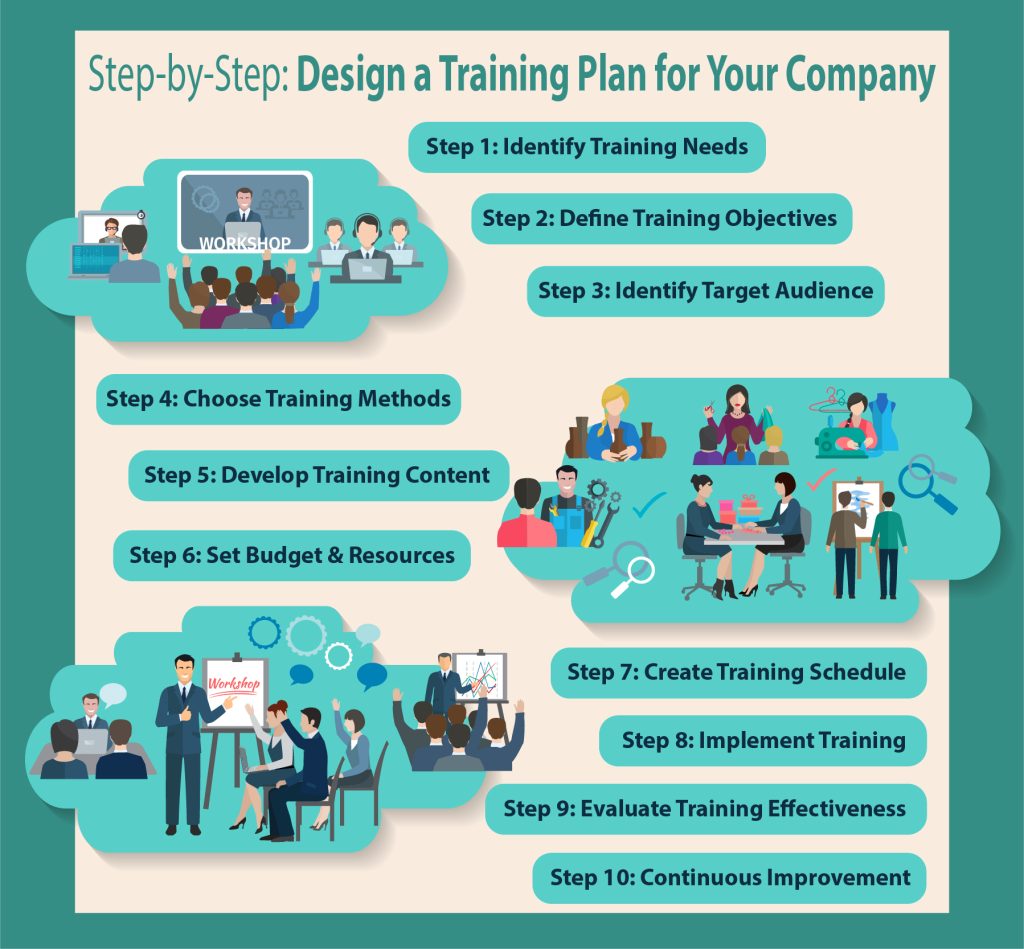
A well-structured training plan helps improve employee performance, productivity, and overall business growth. This guide provides a practical step-by-step approach for organisations to design an effective training plan.
Step 1: Identify Training Needs
– Conduct performance reviews
– Analyse skill gaps
– Gather feedback from managers and employees
– Align with business goals
Step 2: Define Training Objectives
– Set clear, measurable goals
– Example: Improve sales conversion by 20%
– Ensure objectives align with company strategy
Step 3: Identify Target Audience
– Determine departments or roles involved
– Segment employees based on skill levels
Step 4: Choose Training Methods
– In-house training
– Public workshops
– Online learning (e-learning)
– Coaching & mentoring
Step 5: Develop Training Content
– Create structured modules
– Include practical activities and case studies
– Ensure content is relevant to real work scenarios
Step 6: Set Budget & Resources
– Trainer fees
– Venue & logistics
– HRD Corp claim eligibility (if applicable)
Step 7: Create Training Schedule
– Set timeline and duration
– Avoid disruption to operations
– Plan sessions in phases if needed
Step 8: Implement Training
– Communicate clearly to participants
– Track attendance
– Ensure engagement during sessions
Step 9: Evaluate Training Effectiveness
– Collect feedback forms
– Conduct post-training assessments
– Measure KPI improvements
Step 10: Continuous Improvement
– Review outcomes
– Adjust future training plans
– Maintain long-term development strategy
A structured training plan ensures your organisation continuously develops talent, improves productivity, and stays competitive in the market.
Looking to design a customised training plan for your company?
Contact Us today to explore HRD Corp claimable training solutions tailored to your business needs.
 English
  Chinese